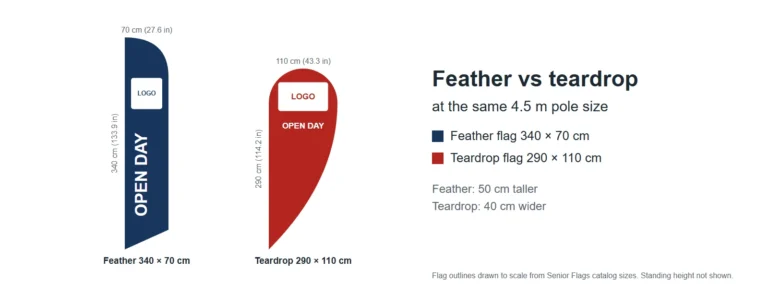
Flags have been made of wool bunting and cotton, and today they are also made of nylon and polyester. Every flag product in the Senior Flags catalog comes in polyester: woven 68D and 100D, 110 gsm knitted, 300D, 165 g/m² spun polyester and 300D Oxford. Satin is offered for some national, table and pennant flags, and pennants and bunting also come in felt, PVC, coated paper or PE.
What material are flags made of?
The fabric depends on when and what the flag was made for. The Star-Spangled Banner of 1813 used English wool bunting for its stripes and blue canton and white cotton for its stars (American Battlefield Trust). The US government’s flag specification, DDD-F-416F (2005 edition), allows cotton bunting, lightweight or heavyweight nylon bunting, nylon-and-wool bunting and rayon banner cloth for the US national flag.
Nylon and polyester are synthetic filament fibers; cotton is a natural fiber spun from short staple. The same specification describes its heavyweight nylon bunting by its yarn: 200 denier, woven at 60 yarns per inch in the warp and 56 in the fill. Worked through, that comes to roughly 100 g/m² (about 3 oz/yd²) before allowing for crimp, close to the weight of our knitted polyester.
Senior Flags prints its custom flags on polyester. The grades differ by yarn, by construction and by weight, and each product is offered on the grades in the table below.
Flag fabrics in our catalog, with their weights
Senior Flags flag fabrics and published weights, October 2026:
| Fabric | Weight (g/m²) | Weight (oz/yd²) | Construction | Used on |
|---|---|---|---|---|
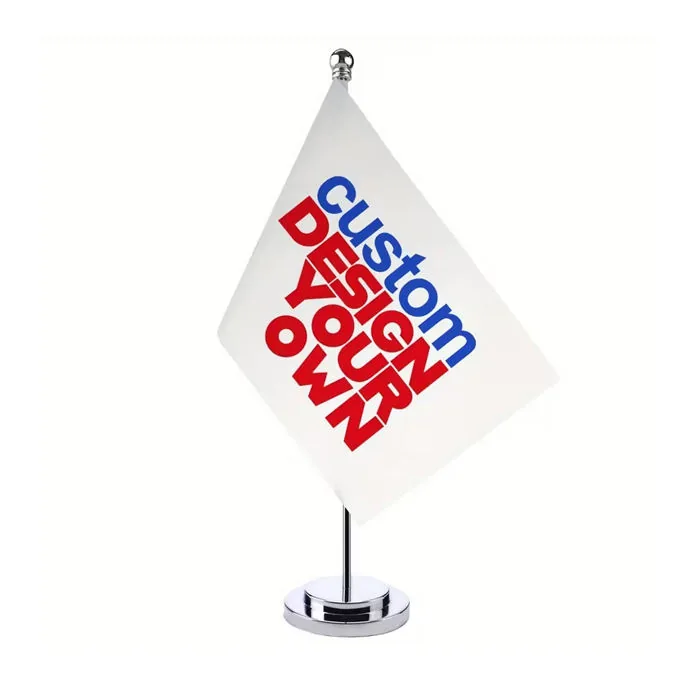
| 68D polyester | not published | n/a | woven, light | national, hand, car, wall and table flags; bunting |
| 100D polyester | 70 to 80 (banners) | 2.1 to 2.4 | woven | national, hand and wall flags; banners |
| 150D polyester | not published | n/a | woven | wall flags |
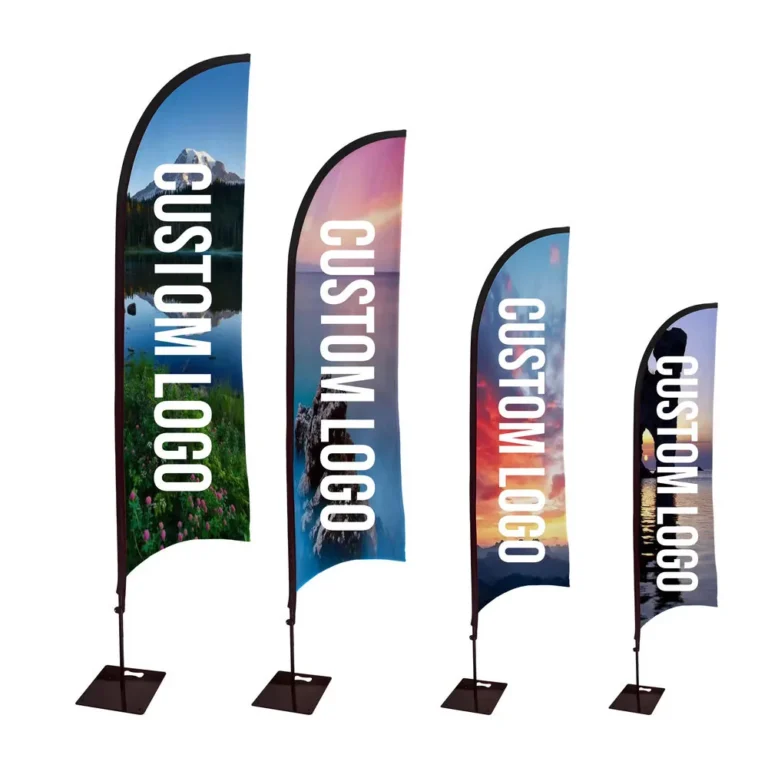
| 110 gsm knitted polyester | 110 to 115 (banners) | 3.2 to 3.4 | knitted | feather, teardrop, national, hand, car and wall flags; bunting; banners |
| Knitted polyester (weight not stated) | not published | n/a | knitted | pennant flags |
| Spun polyester | 165 | 4.9 | woven from spun yarn | national flags |
| 300D polyester | 140 (banners) | 4.1 | woven | banners; double-layer garden flags |
| 300D Oxford | not published | n/a | Oxford weave | garden flags; Oxford is also listed for national flags |
| Polyester, grade not stated | n/a | n/a | n/a | body flags, table flags, pennants |
| Satin | not published | n/a | smooth face with a sheen | national, table and pennant flags |
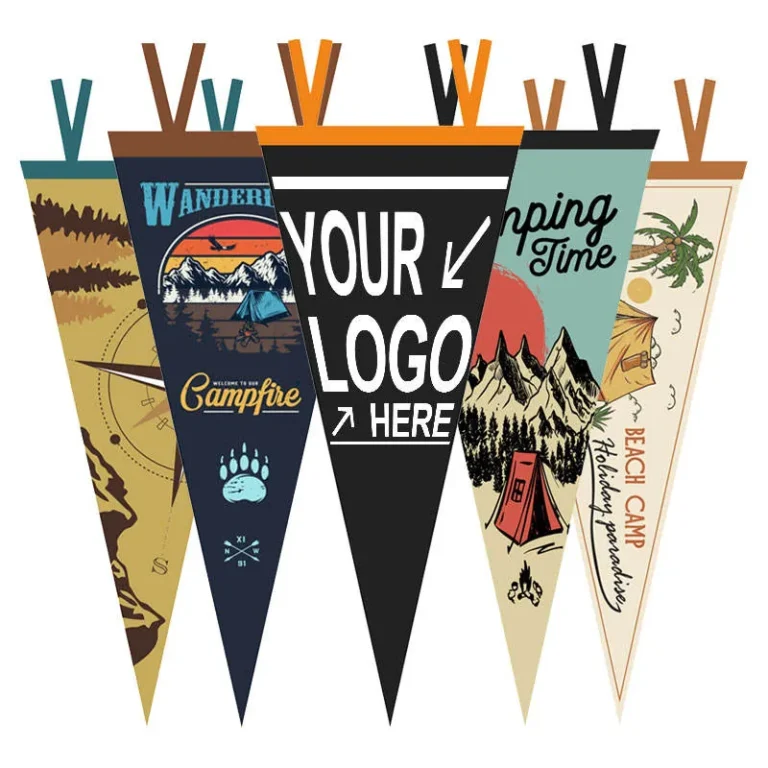
| Felt | 120 or 180 (pennants) | 3.5 or 5.3 | non-woven | pennants; felt bunting (weight not published) |
| PVC | 240 (banners) | 7.1 | banner material | banners; also listed for bunting and pennants |
| Mesh | 125 | 3.7 | mesh | banners |
| Coated paper; polyethylene (PE) | not published | n/a | n/a | paper bunting; paper and PE pennants |
Our product pages give these weights in grams; fabric weight is normally stated per square meter (gsm), and 1 oz/yd² is 33.9 g/m². A weight marked “(banners)” or “(pennants)” is published for that product only.
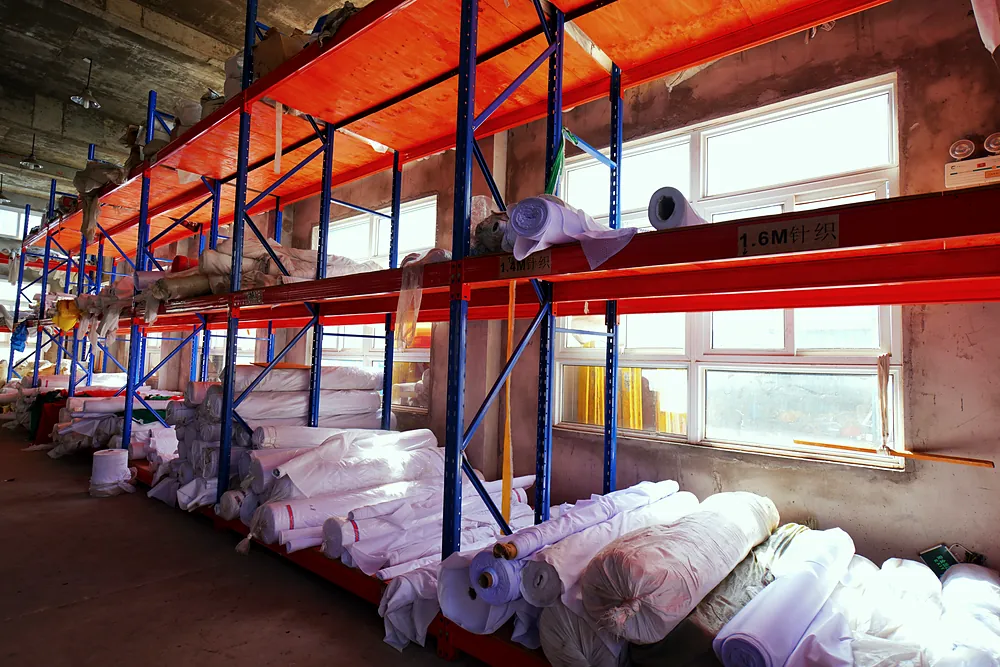
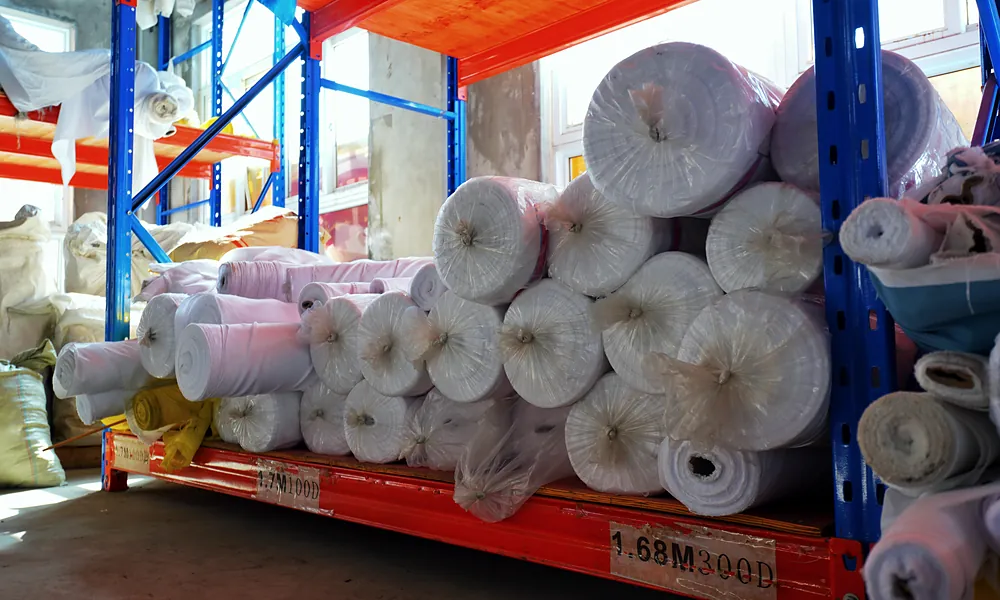
Rack labels in our fabric store pair a width in meters with the fabric: 1.4 m and 1.6 m knitted, 1.7 m 100D and 1.68 m 300D. The roll width sets how wide a single piece of fabric can be, so for a flag wider than the roll, ask whether it is printed on a wider fabric or joined from panels.
What 68D, 100D and 300D mean: denier explained
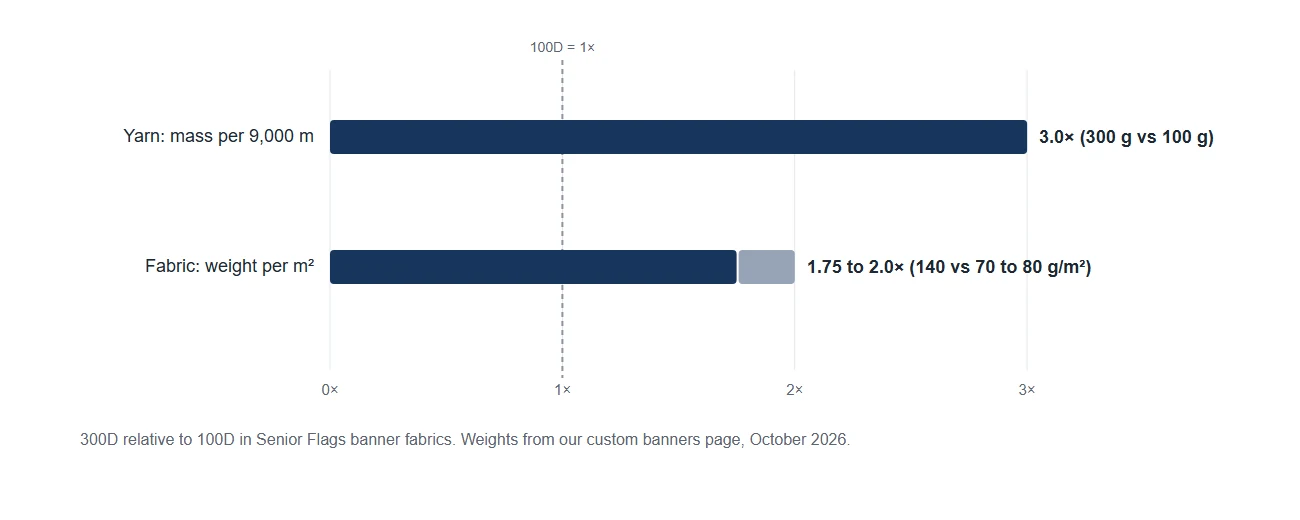
The D is denier, a measure of the yarn rather than the finished fabric. Denier is the mass in grams of 9,000 m of yarn, a unit used for continuous filament yarns (Elsevier ScienceDirect), so 9,000 m of 100D yarn weighs 100 g.
A 300D yarn is three times as heavy per meter as a 100D yarn. Senior Flags’ 300D banner fabric (140 g/m²) weighs about 1.75 to 2 times as much as its 100D banner fabric (70 to 80 g/m²), because fabric weight also depends on how many yarns are packed into each inch and on whether the warp and weft use the same yarn. The US flag specification works the same way: it names the yarn’s denier and gives the fabric weight as a separate requirement.
Denier is a mass, so it only compares yarns of the same fiber. Nylon and polyester differ in density, which means a 200D nylon yarn and a 200D polyester yarn are not the same thickness. When one quote says 200D nylon and another 100D or 300D polyester, compare the fabric weight in g/m² instead.
On a quotation, ask for the fabric name and its weight in g/m², and for a double-sided flag, what sits between the two printed layers. Ours are built in two layers: two layers of 110 gsm knitted polyester with an interlayer on teardrop flags, double-layer 300D polyester on garden flags, double-layer polyester on table flags, and two satin layers with an inter-layer on exchange pennants. The rest of a quotation checklist is in custom flag MOQ and lead times.
Knitted, woven and spun polyester
Woven polyester interlaces two sets of yarn at right angles; 68D, 100D, 150D, 300D and Oxford are all woven. Knitted polyester is made of interlocking loops, which gives it some stretch, and 110 gsm knitted polyester is the standard fabric for our feather and teardrop flags, which we print digitally or by silk screen. Spun polyester is woven from yarn spun out of short fibers instead of continuous filament, which gives it a more cloth-like surface. We use it at 165 g/m² for national flags.
The construction also changes how much of a single-sided print shows on the back. Which printing method we use on which flag type is set out in custom flag printing.
Felt, satin, PVC, mesh and paper
These materials belong to particular products rather than to flags in general. Felt at 120 or 180 g/m² is used for pennants, printed by heat transfer like our polyester pennants. Satin pennants are printed by hand silk screen, and satin is also listed for table flags and some national flags. PVC and mesh are banner materials, and PVC is also offered for bunting and pennants; fabric banners are printed digitally, by silk screen or by heat transfer, and for PVC and mesh the method is confirmed on the quotation. Coated paper and PE are used for paper bunting and for paper or PE pennants.
Nylon and cotton
Most US guides to flag materials compare nylon, polyester and cotton, because they are written for buyers of the American flag. Senior Flags does not make nylon or cotton flags. Every product we make comes in polyester, as the table shows, with satin, felt, PVC, paper and PE as options on some products.
Frequently asked questions
What are pennant flags made of?
Senior Flags makes pennants in felt (120 or 180 g/m²), satin, polyester, knitted polyester, paper, PE or PVC. Felt and polyester pennants are printed by heat transfer, and satin pennants by hand silk screen.
What are garden flags made of?
Our garden flags are double-layer 300D polyester or 300D Oxford fabric, printed on both sides by digital printing or by silk screen, in 30 × 45 cm (supplied with a 1 m metal stand), 70 × 100 cm or custom sizes.
What material are national flags made of?
Senior Flags makes national flags in 68D or 100D polyester, 110 gsm knitted polyester, 165 g/m² spun polyester, Oxford or satin. For the US flag, the federal specification DDD-F-416F also allows cotton, nylon and nylon-and-wool bunting.
What does gsm mean on flag fabric?
Grams per square meter: the weight of one square meter of the finished fabric. One ounce per square yard equals 33.9 gsm, so 110 gsm knitted polyester is about 3.2 oz/yd². If a quote gives an ounce figure, ask for the weight in g/m² so you can compare it with the table above.
Comparing fabric names across quotes? Send the fabric line from a quotation and ask which of our fabrics is closest to it and what that fabric weighs. Check a fabric spec
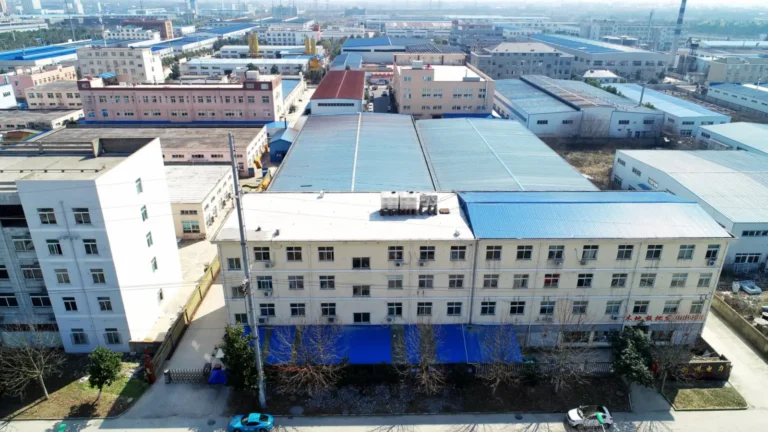
Fabric names, weights and uses: Senior Flags product pages, read 7 October 2026. Photos: our fabric store in Lu’an. Denier definition: Elsevier ScienceDirect topic page on linear density.