To verify a Chinese flag supplier, check its Chinese legal name in the government register and see where your flags would be made, before you pay.
- Register: get the Chinese legal name and look it up in the government register
- Production: see the printing, sewing and inspection areas for your flags
- Sample: made from your own artwork on the production fabric
- Payment: pay only the company named on the contract
- First order: keep it small
Who wrote this guide
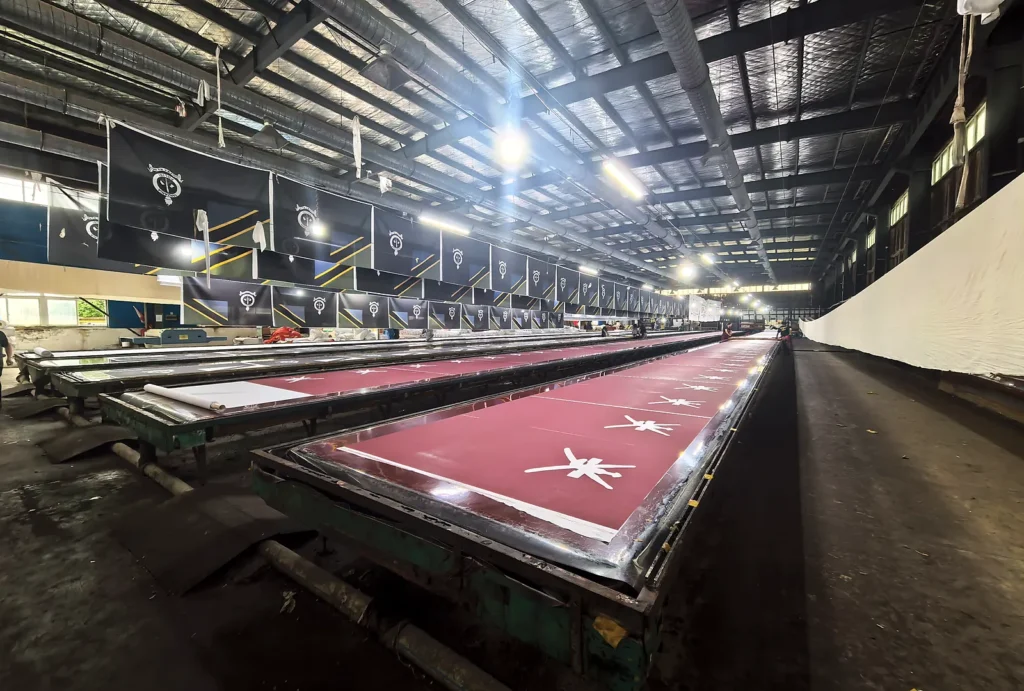
Senior Flags has made custom flags since 2003, printing, sewing and packing in-house on a 24,000 m² site at No. 22 Dahuashan Road, Lu’an, Anhui, with a sales office in Shanghai. We are a flag factory, so we have a stake in this subject; the checks below apply to any supplier, us included.
Why are badges and portfolios not enough to verify a flag supplier?
A badge or a portfolio does not tell you who will make your flags. A marketplace badge shows that a platform checked something about the seller, and a portfolio shows that someone made those products. Neither tells you who will make your flags. Portfolio photos can come from anyone’s projects, so ask for photos or a video call that shows your own artwork on the production line.
Each check below gives you something you can see or look up yourself.
Check 1: how do you look a supplier up in the Chinese register?
Every company in mainland China is registered under an 18-character Unified Social Credit Code, printed on its business license. Ask the supplier for a copy of the license and for its Chinese legal name, then search the code or the Chinese name in the National Enterprise Credit Information Publicity System (GSXT), the official register.
GSXT is in Chinese only. ChineseCheck notes that a search needs “the exact Chinese company name or credit code — English names will not work”, and that the site can be slow or unavailable. Commercial databases such as Qichacha and Tianyancha, or a paid verification report, draw on the same registration data.
| On the register | Compare with |
|---|---|
| Registered name (Chinese) | The English name on the quote, contract and bank details. GSXT has no English names, so ask for a contract that shows the Chinese name and the credit code next to the English name, stamped with the company seal |
| Registration date | How long the supplier says it has been operating |
| Status | Listed as in operation, and not on the list of abnormal operations |
| Business scope | Words for manufacturing (生产, 加工, 制造) rather than trading only |
| Registered address | Where the supplier says the factory is; see below |
| Court and enforcement records | Not on GSXT. ChineseCheck notes that litigation records are not available there; search the Chinese name on China Judgements Online (wenshu.court.gov.cn) for contract disputes |
Fields as shown in China’s national enterprise credit register (GSXT), which lists Chinese names only.
On the business scope, Jing Sourcing points out that a factory’s scope includes manufacturing terms that a trading company’s does not. On addresses, it warns that comparing the office address with the registered address does not settle the question, because companies often run offices and production in different places, even in different cities. Treat a different address as a question: ask which company runs the factory, and look that company up too.
If the contract or the bank account is in the name of a Hong Kong company, it will not appear on GSXT, which covers mainland registrations. Search it on the Hong Kong Companies Registry’s e-Search, ask which mainland company runs the factory, and check that company on GSXT.
A trading company isn’t a problem in itself, and many buyers use one. You just need to know which kind you’re dealing with, because that decides who controls the schedule and whose site you can inspect.
Check 2: how can you see where your flags would be printed and sewn?
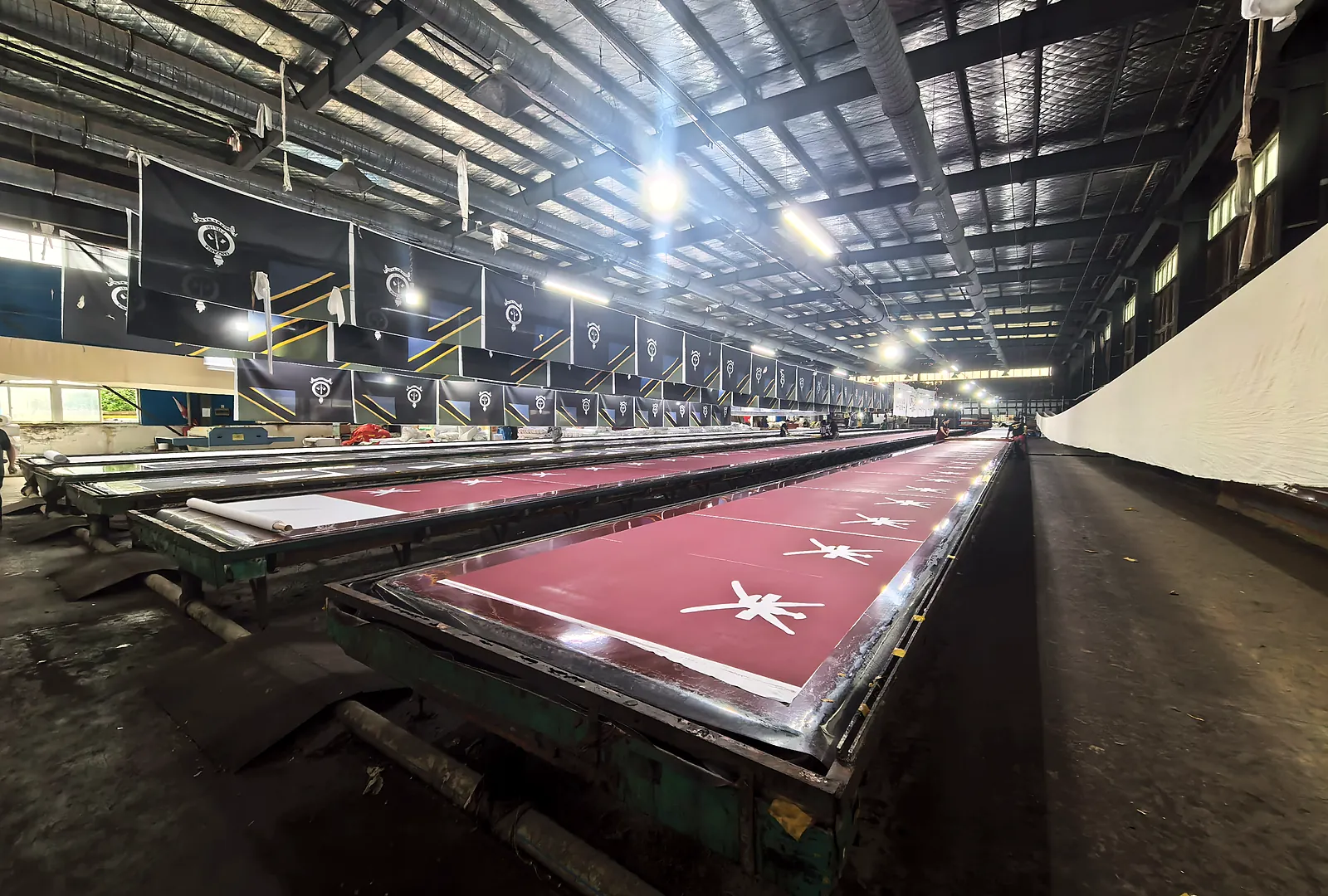
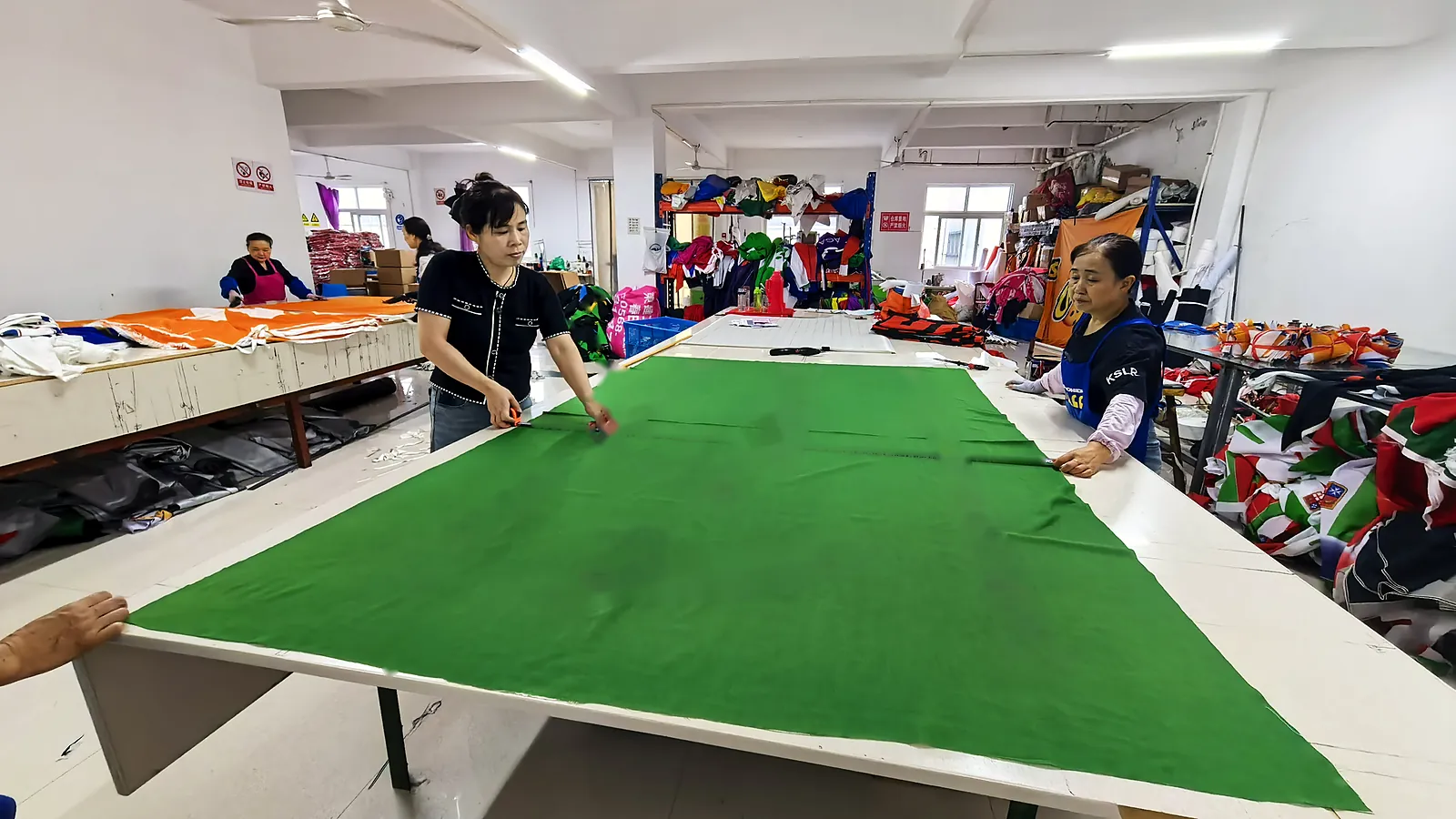
Ask to visit, or ask for current photos of each work area with work in progress. A flag factory has a recognizable set of work areas.
| Area | What you should be able to see |
|---|---|
| Fabric store | Rolls of flag fabric (polyester, knitted polyester, 300D) on racks |
| Printing | Large-format digital printers, heat transfer presses, or long silk screen tables with frames |
| Cutting and sewing | Industrial sewing machines hemming flags; webbing and eyelets being fitted |
| Inspection | Flags being measured and checked on an inspection table |
| Packing | Flags bagged one by one and packed into labeled export cartons |
Typical work areas in a flag factory; which ones you see depends on the printing method for your flags.
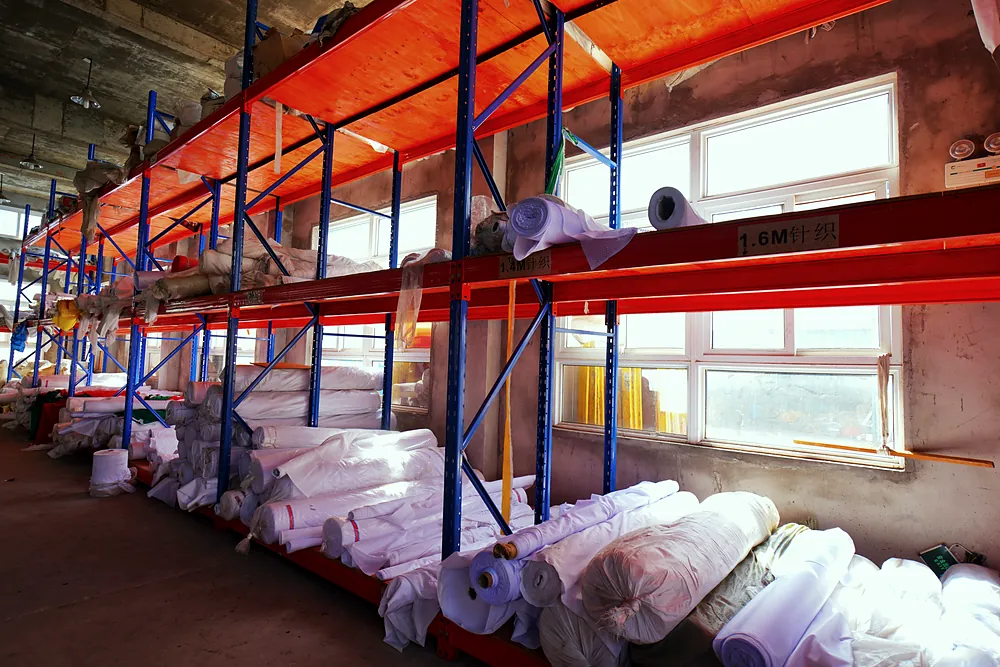
Then ask which printing method your flag will use, and ask to see that equipment running. At our factory, for example (see the table on our flag factory page), feather, teardrop and double-sided garden flags can be digitally printed; national, car, table and wall flags, bunting and pennants can be heat transfer printed; silk screen printing is used on bulk orders where the artwork, color count and quantity support it; and satin pennants are hand silk screened. If a supplier can’t say which method fits your flag, fabric and quantity, they haven’t looked at your order.
When all a supplier can show you is an office or a showroom, ask why. A supplier who subcontracts printing or sewing should say so and name the workshop.
Check 3: why should the sample be made from your own artwork?
A stock sample proves that someone made a flag. A sample made from your own artwork, on the production fabric rather than a substitute, shows that this supplier can make yours. Check it against your specification: finished size (garden flags, for instance, are sold as 12 × 18 in, which we make as 30 × 45 cm, about 11.8 × 17.7 in; see our garden flag size chart), colors against your Pantone references, the number of printed sides, stitching and the hoist finish. On a double-sided flag, check both sides.
At Senior Flags a sample takes 5 to 7 calendar days from artwork confirmation, excluding shipping. Our artwork and proof checklist lists what to check on the proof before you confirm it.
Checking Senior Flags? Send us your artwork and the specification. We reply with the sample time for your design, and you can book a visit to our factory in Lu’an by appointment.
Check 4: how, and whom, should you pay?
Direct orders with Chinese factories are usually paid by bank wire (T/T), to the company named on the contract. The U.S. International Trade Administration lists wire transfers among the most common ways to pay in advance, and notes that paying in advance is “the least attractive option for the buyer”. A letter of credit is “one of the most secure instruments” in the same guide, but bank fees on both sides make it better suited to larger orders than to a first run of a few hundred flags. If you found the supplier on Alibaba.com, pay through Trade Assurance on the platform, and treat a request to pay outside the platform, including by bank transfer, as a warning sign. Whichever you use:
- Pay only the company named on the contract and on the register. International wires carry the beneficiary name in English, so check that the English name on the pro forma invoice, the contract and the bank details is identical and is a company account. A request to pay a personal account, a differently named company or “our partner’s account” is a reason to stop.
- Attach the written specification (size, fabric, printed sides, finishing, pieces per carton) to the purchase order; it is what you inspect against.
- Where there is a balance to pay, tie it to a stage you can check, such as photos of packed cartons or a third-party inspection report.
Our own terms: bulk orders generally take a 30% T/T deposit, and small orders are generally paid in full, which is payment in advance. If your first order with us is small, there’s no balance to hold back, so do the checks in this guide (the register, a sample made from your artwork, a factory visit or a third-party inspection) before you pay. The exact schedule is written into the quotation or contract; minimums by product are in custom flag MOQ and lead times.
Check 5: why start small and inspect before shipment?
A small first order limits what you can lose if a supplier ships short or stops replying, and it tests the whole process, from proof to packed cartons, before the large order.
For a first flag order, that means:
- Order at the supplier’s minimum for one or two designs.
- Check a physical sample first.
- Ask for photos of the packed cartons, with labels and carton count, and check the count against the packing line on the quote (our national flags, for example, are packed 150 to a carton).
- For larger orders, book a third-party pre-shipment inspection for when the order is finished and packed, and give the inspector your written specification and the approved sample to check against.
What should you ask any flag supplier before you pay?
Send these seven questions to any flag supplier before you pay, and compare the answers with the register and the contract.
| Ask for | Good answer | Warning sign |
|---|---|---|
| Chinese legal name and license copy | Name and code match the register | Refuses, or the name differs from the contract |
| The production you will use | Printing, sewing and inspection areas with work in progress | Office or showroom only |
| Printing method for your flag | A method matched to your flag, fabric and quantity | “Any method is fine” |
| Sample from your artwork | Made to your size, fabric and colors | Only stock samples offered |
| Written specification | Size, fabric, sides, finishing and packing in writing | “Same as photo” |
| Payment details | Company account matching the contract | Personal or third-party account |
| Visit or inspection | Visit or third-party inspection by appointment | Refused without a reason |
Frequently asked questions
How can I check if a Chinese company is real?
Ask for its business license and Chinese legal name, then search the Unified Social Credit Code or the Chinese name in the national register at gsxt.gov.cn. The name, status and business scope should match what the supplier told you.
Can I search a Chinese company’s register in English?
No. GSXT searches need the Chinese name or the credit code. Ask the supplier for its Chinese name, or use a commercial database or a verification report.
How do I tell a factory from a trading company?
Check the business scope on the register for manufacturing terms, then visit or ask to see the printing and sewing areas with work in progress. A trading company should name the workshop it uses.
Is an Alibaba “verified supplier” badge enough?
No. A badge is a starting point. Check the register, see the production and get a sample made from your artwork before paying for bulk.
How do I buy directly from a Chinese flag factory?
Send a written specification (size, fabric, printed sides, finishing, pieces per carton), check the company on the register, order a sample made from your artwork, sign a contract or pro forma invoice that states the payment terms, and book a pre-shipment inspection on larger orders. Minimums and lead times by product are in custom flag MOQ and lead times.
What is a safe way to pay a Chinese supplier for a first order?
If you found the supplier on Alibaba.com, pay through Trade Assurance on the platform. For a direct order, wire money only to a company account whose name matches the contract, keep the first order small, do the checks before you pay, and tie any balance to an inspection report. A letter of credit gives the most bank protection but suits larger orders because of its fees.
Can I visit the Senior Flags factory?
Yes, by appointment. Third-party inspection agencies can also inspect at the factory.
Checking Senior Flags? Book a visit to our Lu’an factory or a third-party inspection by appointment, or order a sample made from your own artwork. Contact our team
Prepared with AI assistance by the Senior Flags editorial team. Company details were confirmed by Senior Flags in October 2026, and outside sources are linked where they are quoted, as read on 10 October 2026.